
3 Common SEO Audit Gaps That Are Costing Your Shop Local Clicks
3 Common SEO Audit Gaps That Are Costing Your Shop Local Clicks
If you are still looking at your local SEO audit and checking off boxes for “NAP consistency” and “keyword density,” you are already behind. As we move closer to 2026, the landscape of local search has shifted from a simple directory-matching game to a sophisticated behavioral and evidentiary ecosystem. I’ve seen it time and again: business owners paying agencies anywhere from $750 to $3,000 per month for local SEO services, only to find their visibility plateauing while a competitor with fewer reviews somehow dominates the Map Pack.
The reality is that 78% of local mobile searches result in an offline purchase. If you aren’t appearing in those top three spots – the “Map Pack” – you aren’t just losing “clicks”; you are losing actual foot traffic and revenue. Most “standard” audits only scratch the surface, focusing on what I call “Layer 1” SEO. They look at the technical health of your website but completely ignore the “ground truth” signals that Google’s AI-driven local algorithm now prioritizes.
Section 1: The “Layer 1” Trap
Most local business owners are trapped in Layer 1. This is the level of SEO where you obsess over whether your H1 tags are correct or if your business name is spelled exactly the same on Yelp as it is on your website. While these things matter, they are the “ante” to get into the game – they aren’t how you win it.
The “Layer 1” trap occurs when an audit focuses on ranking fluctuations without connecting them to actual consumer behavior or revenue. You might see your “rankings” go up for a specific long-tail keyword, but your phone isn’t ringing. Why? Because the audit failed to identify the gaps between your digital presence and the physical reality of your business. In an era where 80% of US consumers search online for local businesses weekly, Google has become incredibly skeptical. It no longer trusts what you say about your business; it only trusts what it can verify through third-party data and user interaction signals.
To break out of this trap, your local seo audit needs to evolve. We need to look at the “hidden” gaps that are currently acting as a glass ceiling for your visibility. If you want to truly rank google business profile assets effectively, you have to move into the realm of physical proof and behavioral signals.
Section 2: Gap #1, The “Physical Proof” Void (Beyond the NAP)
For years, the “NAP” (Name, Address, Phone number) was the holy grail of local SEO. If your NAP was consistent across the web, you ranked. But in 2026, consistency is no longer enough. Google’s algorithm has moved toward a “Proof of Service” model. The biggest gap in modern audits is the failure to document and display physical proof that your business is actually doing what it says it does, where it says it does it.
Google is increasingly using computer vision and AI to analyze the photos and videos uploaded to your profile. If your profile is filled with stock photos or generic office shots, you are signaling to Google that you lack “ground truth.” High-performing google business profile seo now requires transaction-based signals. This means Google wants to see “real-world” interaction.
The Rise of “Proof of Service”
What does this look like in practice? It means moving beyond static images. You need video proof of your team on-site, geotagged photos of completed projects, and customer-generated content that confirms your location. When an audit misses this, it misses the primary reason why a competitor might be outranking you despite having a “weaker” website. They aren’t winning on code; they are winning on evidence.
To fix this, you should consult the “7 Proof-of-Service Signals for Your 2026 Local Ranking Checklist”. These signals include things like “check-in” data, localized mentions from neighborhood-specific blogs, and even the frequency of directions requests originating from specific zip codes. If your current strategy doesn’t account for these, you are essentially ghosting your own customers.
Furthermore, Google is looking for “Transaction Evidence.” This doesn’t necessarily mean they are looking at your bank account, but they are looking at the digital trail of a service being completed. Reviews that mention specific services (“The plumber fixed my burst pipe in the kitchen”) are weighted significantly heavier than generic reviews (“Great service!”). If your audit doesn’t analyze the sentiment and specificity of your reviews, it’s failing you.
Section 3: Gap #2, The Proximity Filter & Radius Ghosting
Have you ever noticed that you rank #1 when you are standing in your office, but if you drive two blocks away, you disappear from the Map Pack entirely? This isn’t a glitch; it’s the “Proximity Filter,” also known as “Radius Ghosting” or “Latitude Drift.”
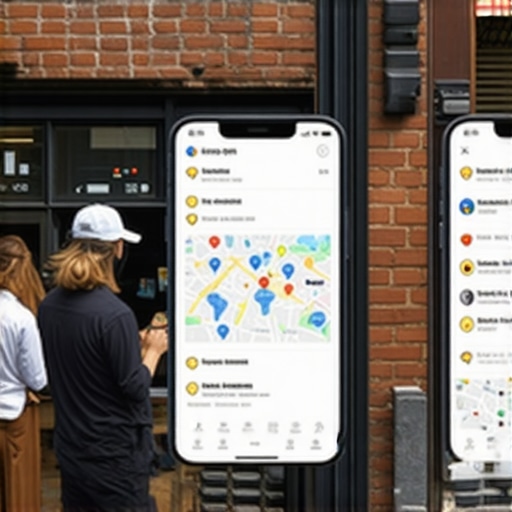
Most audits give you a static ranking report. They tell you “You are #3 for ‘Plumber in Chicago’.” This is dangerously misleading. Local SEO is not a single data point; it is a grid. The second major gap in local audits is the failure to account for how your ranking decays as the user moves away from your physical location. If you aren’t using a google maps rank tracker, you are flying blind.
Understanding the “Filter Effect”
Google has a vested interest in showing the most relevant and closest results. However, they also apply a filter to prevent the Map Pack from being dominated by the same type of business in the same building or block. If you are in a “dense” niche – like law firms or dental practices – and you share a building or a street with three other firms, Google may “filter” you out in favor of a competitor to provide “variety” to the user.
This is where many business owners get frustrated. They follow the “Ultimate Local SEO Checklist for Boosting Your Business Ranking” to the letter, yet they still see their pin “ghost” once they get a mile away. This gap exists because the audit didn’t look at the competitive density of your specific latitude and longitude.
To combat radius ghosting, you must increase your “Authority Radius.” This is done by generating signals that originate from outside your immediate neighborhood. If all your reviews and website traffic come from within a 1-mile radius, Google will keep your “visibility bubble” small. You need to prove relevance to the surrounding suburbs or districts. This is why a “Why Your 2025 SEO Guide Destroys 2026 Local Shop Rankings” mindset is dangerous – it focuses on the “near me” aspect without building the “authority” aspect that allows you to break through the proximity filter.
Section 4: Gap #3, The Interaction Signal Deficit (Zero-Click Optimization)
The third and perhaps most critical gap is the “Interaction Signal Deficit.” We are living in a “Zero-Click” world. This means that a huge percentage of users get all the information they need – your phone number, your hours, your pricing, and your reputation – directly from the Google search results page without ever clicking through to your website.
A traditional audit checks if your website is fast and mobile-friendly. A 2026-ready google business profile optimization audit checks if your GBP is “sticky.” If users are landing on your profile and immediately bouncing back to the search results to click on a competitor, Google interprets this as a “failed intent” signal. This will tank your rank higher on google maps efforts faster than any technical error on your website.
AI Overviews and the Death of the Click
With the rollout of AI Overviews (formerly SGE), Google is now summarizing local business data for the user. If your profile is incomplete or lacks engagement, the AI will simply skip you. Incomplete profiles signal distrust to Google’s LLMs (Large Language Models). Your rank google business profile strategy must include high-engagement elements:
- Active Q&A: Are you seeding your own frequently asked questions and answering them authoritatively?
- GBP Posts: Are you posting updates at least once a week to show the “lights are on”?
- Messaging: Is your “Chat” feature enabled, and what is your response time?
- Photo Interaction: Are users “liking” your photos or uploading their own?
If your audit doesn’t measure these “Micro-Conversions,” you are missing the data that actually drives the algorithm. Google wants to see that your business is a living, breathing entity. When a user spends three minutes looking at your photos and reading your Q&A, that is a massive “Success Signal” to Google, even if they don’t click “Visit Website.” This is the core of “Zero-Click Optimization.”
Section 5: How to Close the Gaps (Action Plan)
Identifying these gaps is only half the battle; you must close them systematically. Local SEO is no longer a “set it and forget it” task. It requires a “Google Maps Action Plan: Winning Local Visibility in 2025” that is updated for the realities of 2026.
Your Step-by-Step Recovery Plan:
- Audit for “Ground Truth”: Perform a deep local seo audit that looks at your visual evidence. Replace stock imagery with high-resolution, geotagged videos of your team in action. Use “How Physical Proof Fixes Your 2026 Local SEO Checklist” as your guide.
- Map Your Visibility Grid: Don’t rely on single-point rank trackers. Use a professional google maps rank tracker to see exactly where your “visibility bubble” pops. Identify the “dead zones” and target those specific areas with localized content and reviews.
- Maximize Profile Stickiness: Audit your GBP for interaction signals. Ensure every question is answered, your “Products” and “Services” menus are fully built out, and you are using local seo tools to automate the posting of fresh, engaging content.
- Hire a Professional Service: If this sounds overwhelming, it’s because it is. The “standard” $500/month SEO package won’t cover this level of depth. You may need a dedicated google maps ranking service that understands behavioral signals and proximity filtering.
The gap between the “haves” and the “have-nots” in local search is widening. The businesses that continue to rely on outdated 2020-era tactics will find themselves pushed further down the Map Pack by savvy competitors who understand the power of physical proof and interaction signals. Don’t let your shop be a victim of “Radius Ghosting” or “Interaction Deficits.”
Stop losing customers to competitors who are simply playing the game better. It is time to move beyond the basics. Use a professional google business profile audit tool today to find the leaks in your local funnel and start reclaiming the clicks – and the revenue – you’ve been losing.