
The Specific Local SEO Errors That Keep Your Shop Stuck on Page Two
The Specific Local SEO Errors That Keep Your Shop Stuck on Page Two
In the world of local search, there is a common saying among digital marketers: the best place to hide a dead body is on page two of Google. While it sounds morbid, the data supports the sentiment. Research consistently shows that page two of Google search results receives less than 1% of total clicks. For a local business – whether you are a plumber in Phoenix or a dentist in Dallas – being on page two is functionally equivalent to being invisible.
Many business owners find themselves trapped in this “Page Two Graveyard,” despite having a legitimate business, a functional website, and even a handful of five-star reviews. They often ask, “why is my google business profile not ranking?” The answer is rarely a single, catastrophic failure. Instead, it is typically a “death by a thousand cuts” – a series of small technical and strategic local seo errors that signal to Google’s algorithm that your business is less relevant, less trustworthy, or less prominent than your competitors.
Industry data reveals a startling trend: approximately 66% of local sites are missing basic local SEO fundamentals, such as optimized metadata, proper schema markup, or dedicated service landing pages. If you feel like you’ve hit a glass ceiling, it’s likely because your google business profile seo is suffering from invisible leaks. This guide will dissect the technical and strategic errors preventing you from hitting the coveted “Map Pack” and provide the roadmap to fix them.
The “Ghost Profile” Syndrome: Incomplete Data & NAP Inconsistency
The foundation of any successful local map pack seo strategy is trust. Google’s primary goal is to provide users with accurate, reliable information. When your Google Business Profile (GBP) is incomplete or contains conflicting information, you create “friction” for the algorithm. We call this the “Ghost Profile” syndrome – a listing that exists but lacks the substance required to rank.
One of the most critical factors in this trust equation is NAP consistency (Name, Address, Phone number). It sounds simple, but it is where many businesses fail. If your business is listed as “Main St. Plumbing” on your website, “Main Street Plumbing, LLC” on Yelp, and “Main St. Plumbers” on your GBP, Google perceives these as potential discrepancies. Data suggests that 68% of customers will stop doing business with a company if they find inaccurate information online. Google knows this, and it penalizes profiles that show signs of data fragmentation.
To combat this, you must perform a rigorous audit. Identifying these gaps manually is tedious, which is why experts often use a google business profile audit tool to highlight inconsistencies across the web. You should also consult resources like 7 Ways to Spot NAP Inconsistencies Before They Tank Your Ranking to ensure your digital footprint is perfectly aligned. Beyond NAP, a “Ghost Profile” often lacks a robust business description, selected secondary categories, and a comprehensive list of services. Every empty field in your dashboard is a missed opportunity to feed the algorithm the data it needs to rank google business profile higher than your rivals.
Proximity Filters and the “Radius Drop”
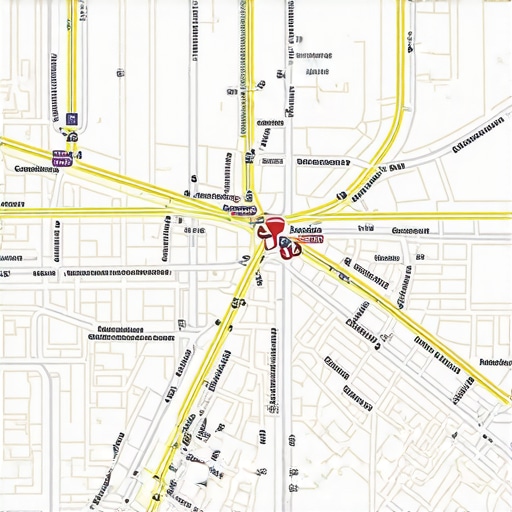
One of the most frustrating experiences for a business owner is seeing their pin “vanish” from the Map Pack as soon as they move a few blocks away from their physical office. This is known as the “Radius Drop,” and it is often caused by proximity filters and a phenomenon called “Latitude Drift.”
Google’s algorithm is designed to prioritize the most relevant results closest to the user. However, if there are multiple businesses in the same category located in a tight cluster (like a medical complex or a downtown office building), Google will often “filter out” similar businesses to provide variety to the user. If your profile lacks strong authority signals, you are the one who gets filtered. Furthermore, if your map pin isn’t calibrated correctly or your website lacks localized geo-signals, your “relevance radius” shrinks.
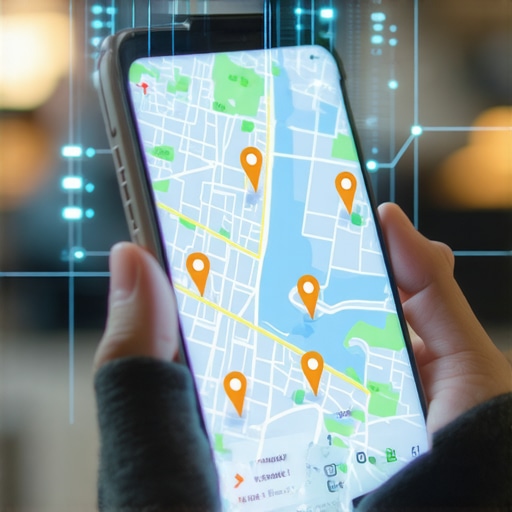
To fix this, you need to strengthen your proximity signals. A highly effective technical fix is The Map Embed Tactic That Finally Fixes Broken Proximity Signals. By embedding a properly configured, optimized Google Map on your contact and service pages, you reinforce your physical location in Google’s index. As we move toward 2026, rankings require more than just a verified address; they require “interaction heat” – a consistent flow of users engaging with your directions, calling from the map, and clicking through to your site from specific geographic coordinates. If you’re seeing a sudden decline in visibility, you may be falling victim to 5 proximity errors that are wrecking your local ranking checklist right now.
The Content Gap: Missing Service Area & Hyperlocal Proof
A common mistake among contractors and service-based businesses is relying solely on a homepage to do all the heavy lifting. If you offer local seo services or plumbing repairs across five different cities, but your website only mentions your main office location, you are effectively invisible in the other four cities. This is the “Content Gap.”
To rank higher on google maps across a wider region, you must move beyond generic content. You need dedicated Service Area Pages (SAPs) or “City Pages.” These pages shouldn’t just be “copy-paste” versions of each other with the city name swapped out. Google’s AI is now sophisticated enough to detect “thin content” and will penalize it. Instead, these pages must provide “Physical Proof of Service.”
What does physical proof look like? It includes mentions of local landmarks, photos of your team working in that specific neighborhood, and localized reviews. Without this, your google maps marketing efforts will stall. As noted in the industry, Why Your Local Ranking Plan Fails Without Physical Proof of Service, Google looks for evidence that you actually do business in the areas you claim to serve. If you want to outperform a gmb ranking service that uses shortcuts, you must invest in hyperlocal content that proves your local expertise.
Engagement Signals: Reviews, Q&A, and Photos
Many businesses treat their GBP as a “set it and forget it” asset. In reality, it is a dynamic social platform. Google tracks engagement signals to determine which businesses are active and reliable. If your profile is static, your rankings will inevitably decay.
Reviews are the most obvious engagement signal, but it’s not just about the star rating. The frequency of reviews and, more importantly, your response rate matters. Data indicates that 89% of consumers read review responses. If a potential customer sees a negative review – or even a positive one – left unaddressed, it signals a lack of customer service. From an SEO perspective, responding to reviews allows you to naturally include keywords related to your local seo ranking factors.
Another frequently ignored area is the “Google Q&A” section. This is a public forum where anyone can ask a question about your business. If you don’t proactively populate this section with frequently asked questions and professional answers, your competitors or disgruntled former customers might do it for you. Furthermore, your photo strategy needs an upgrade. Stock photos are a ranking deterrent. Google’s Vision AI can identify stock imagery and will prioritize businesses that upload real, high-resolution photos of their team, their equipment, and their completed projects. Utilizing local seo tools to track how these photos impact your “search views” is essential for modern google business profile optimization.
The 2026 Shift: AI Overviews and Transactional Proof
The landscape of local search is shifting rapidly with the integration of AI Overviews (formerly SGE). Google is moving away from simply listing businesses and toward providing “answers.” In this new era, the algorithm looks for “transactional proof” to verify a business’s legitimacy. This includes signals like real-world check-ins, booking confirmations through the “Reserve with Google” feature, and consistent user interaction.
To future-proof your rankings, you must ensure your technical SEO is flawless. This means implementing local business schema, optimizing for voice search, and ensuring your mobile load speeds are elite. If you aren’t using a google maps rank tracker to monitor your position daily, you won’t be able to react to the volatility that AI integration brings. To stay ahead, consult The Ultimate Local SEO Checklist for Boosting Your Business Ranking to ensure you aren’t leaving any technical stone unturned.
Conclusion: Stop Guessing and Start Auditing
Getting stuck on page two isn’t a permanent sentence; it’s a diagnostic signal. It means your google maps ranking service or internal strategy is missing the technical nuances that Google now demands. From fixing NAP inconsistencies to generating hyperlocal proof of service, the path to the Map Pack is paved with data-driven optimizations.
Stop guessing why your competitors are outranking you. It is time to take a professional approach to your digital presence. Whether you choose to use advanced local seo ranking tools or perform a manual deep dive into your analytics, the first step is identifying the specific errors holding you back. Visit SEO Viper Tools today to regain your visibility and move your business from the graveyard of page two to the top of the Map Pack.