
How to Stop Your Service Area Pages from Looking Like Spam to Local Searchers
How to Stop Your Service Area Pages from Looking Like Spam: A Guide to Local Dominance
Service area pages (SAPs) have long been the backbone of local digital marketing for contractors, medical professionals, and mobile service providers. However, the era of the “ghost town” landing page – where the only difference between your Dallas page and your Fort Worth page is a single word – is officially over. In the current landscape of google business profile seo, quality has become the ultimate gatekeeper.
As a Local SEO expert, I frequently see businesses creating 50 identical pages in an attempt to “carpet bomb” a region with search presence. This “template-swapping” strategy is not just ineffective; it is a direct violation of search engine guidelines. If your website is filled with thin, repetitive content, you aren’t just failing to rank; you are actively inviting a penalty that could de-index your entire domain. This guide will walk you through the transition from spammy doorway pages to high-converting, hyperlocal assets that satisfy both users and algorithms.
Before diving into the technical nuances, it is critical to understand the current regulatory environment. As of September 11, 2025, Google updated its Business Links Policy, requiring all links from GBPs to point to dedicated, location-specific landing pages. This move reinforces the need for pages that offer genuine value to the local user. For more on the foundational elements of your strategy, see The Ultimate Local SEO Checklist for Boosting Your Business Ranking.
The “Doorway Page” Trap: Why Google is Deleting Your Pages
To rank higher on google maps, you must first understand what Google considers “spam.” Google defines doorway pages as sites or pages created to rank for specific, similar search queries that lead users to the same destination. In the context of service area business seo, this usually looks like a series of pages that all have the same “About Us” and “Services” text, but swap out “[City A]” for “[City B].”
The “ticking time bomb” of manipulative practices has been accelerated by the rise of AI-assisted publishing. While AI can be a powerful tool, many businesses are using it to spin up hundreds of pages in minutes. Google’s algorithm is now sophisticated enough to identify the lack of unique semantic value across these pages. When the algorithm detects a pattern of thin, repetitive content designed solely to capture search traffic without providing unique local utility, it classifies them as doorway pages. This can lead to broad-impact algorithmic penalties that strip your site of its authority overnight.
For those looking to stay ahead of these updates, utilizing professional google business profile seo techniques is no longer optional. The goal is to build a footprint that looks like a community resource, not a lead-generation farm. To understand how this fits into your broader digital presence, refer to our SEO Guide 2025: Crafting a Winning Local Business Strategy.
Anatomy of a High-Performing, Non-Spammy Service Area Page
Creating a city page seo strategy that works requires a shift toward “hyperlocal” value. Each page must be a unique entity that proves you are an expert in that specific geography. Here is a checklist of the essential elements your SAP needs to include:
1. The Localized H1
Your H1 should match the user’s intent perfectly. Instead of just “Plumbing Services,” use “Emergency Plumbing and Drain Cleaning in [City Name].” This signals relevance immediately to both the user and the crawler.
2. The “Local Promise” Intro
Ditch the generic corporate fluff. Your intro should be a 3-5 sentence paragraph unique to that specific town. Mention how long you’ve been serving that specific neighborhood or your involvement in local community events. This is the first thing a user reads; if it feels like a template, they will bounce.
3. Physical Proof and Local Context
This is where most businesses fail. To prove you are actually active in a city, you must mention local landmarks, specific neighborhoods you frequently visit, or even local conditions that affect your work. For a roofer, this might mean discussing how the specific soil or wind patterns in [City Name] affect roof longevity. For a dentist, it might be mentioning your proximity to the local high school or park.
Using advanced local seo tools can help you identify the specific keywords and local entities that your competitors are missing. By weaving these into your content, you build a “topical authority” that Google finds impossible to ignore. For a deeper dive into optimization, check out our Business Profile Checklist: Optimize for Local Search Today.
Proving Proximity Without a Physical Address
Service Area Businesses (SABs) face a unique challenge: they don’t have a storefront for customers to visit, which often makes proving proximity difficult. Pure service area businesses must hide their physical address in the GBP and specify service areas by city or postal code to avoid suspension. However, hiding your address doesn’t mean hiding your location signals.
The research is clear: SABs that specify areas by city, postal code, or region – rather than just a broad radius – tend to perform better in local search results. To rank google business profile assets effectively for an SAB, you must employ “Proof-of-Location” tasks. One of the most effective methods is using geotagged photos. When you complete a job in a specific city, take a photo and ensure the metadata contains the GPS coordinates of that location. Uploading these to your SAP and your GBP creates a digital breadcrumb trail that confirms your physical presence in the area.
Additionally, discussing specific local regulations or permit requirements for that city adds another layer of authenticity. If you are an HVAC contractor, mentioning the specific municipal codes for [City Name] proves you are a local expert. This level of detail is what separates a high-ranking page from a spammy one. If your rankings are currently stuck, you might find the answer in The profile embed tactic that actually fixes stalled map rankings. You can also explore specialized rank google business profile services to help bridge the proximity gap.
The Review Strategy: Moving Beyond “Great Job!”
Reviews are the lifeblood of local search, but not all reviews are created equal. Generic 5-star reviews that say “Great job!” or “Highly recommend!” provide social proof to humans but offer very little “juice” to the algorithm. To truly move the needle, you need “location-rich” reviews.
Encourage your customers to be specific in their feedback. A review that says, “Fahed’s team did an amazing job with our roof repair in [City Name] after the storm last Tuesday,” is worth ten generic reviews. It confirms three things: the service provided, the quality, and – most importantly – the location. When Google sees a cluster of reviews mentioning a specific city, it reinforces your relevance for that geography.
This is a core component of any google maps ranking service. By strategically asking for reviews from clients in your target service areas, you are essentially crowdsourcing your SEO. You can even guide customers by asking specific questions like, “What neighborhood are you in?” or “Which of our services did you use today?” This naturally leads them to include the keywords you need. For more on why your current reviews might be underperforming, read Why Most Five Star Reviews Fail to Move Your Map Position. Leveraging a google maps ranking service can help automate and refine this process.
Technical Signals: Schema and Map Embeds
Beyond the visible content, your service area pages need a strong technical foundation. This is where you “force” the search engine to understand the geographic boundaries of your service. Two of the most powerful tools in your arsenal are Local Business Schema and Google Map embeds.
Local Business Schema: This is structured data that tells search engines exactly what your business is, where it is, and what it does. For SAPs, you should use “ServiceArea” properties within your schema to define the specific cities or zip codes the page covers. This removes any ambiguity for the crawler.
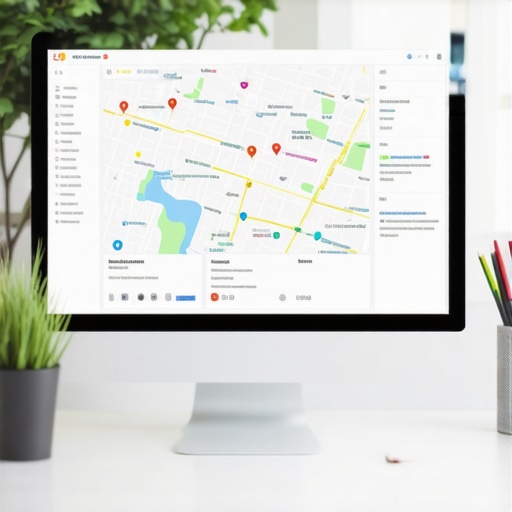
The Map Embed Tactic: To fix broken proximity signals, embed a Google Map on your city page. However, don’t just embed a generic map of the city. Embed a map that shows your service area or, if applicable, a map with a pin of a recent project in that area. This creates a direct API connection between your website and Google Maps, anchoring the page to the specific geography.
When you combine these technical signals with google maps optimization, you create a powerful “relevance engine.” This tells Google: “This page is the most relevant result for this service in this specific town.” For those who want to get technical, I’ve outlined the process in How Specific Schema Edits Force Google to Show Your Service Area. Professional google maps optimization ensures these technical elements are implemented without errors that could lead to site instability.
Hyperlocal Content: The Competitive Edge
The biggest gap in most Local SEO strategies is the failure to embrace true hyperlocal content marketing. Most competitors are still trying to “spin” content – using software to rewrite the same paragraphs slightly. To dominate, you must do what they won’t: write about the community.
Consider adding a “Local Resources” section to your service area pages. This could include links to the local chamber of commerce, mentions of local charities you support, or guides on local weather-related maintenance. If you are a plumber, write about how the hard water in [City Name] affects water heaters. If you are a lawyer, discuss how specific county courts in [City Name] handle certain filings. This level of unique, non-duplicative content is the ultimate “anti-spam” signal. It proves to Google that your page isn’t just a doorway; it’s a destination.
Conclusion & Action Plan
The future of local search optimization is rooted in authenticity. As Google continues to refine its ability to detect doorway pages and thin content, the businesses that invest in high-quality, hyperlocal service area pages will be the ones that own the Map Pack. One high-quality, deeply researched city page will always outrank 20 thin, automated placeholders.
Your action plan is simple:
- Audit your current SAPs. If they look like clones of each other, they are a liability.
- Select your top 5 most important service cities and rewrite them using the “Local Promise” and “Physical Proof” frameworks.
- Implement Local Business Schema to clearly define your service boundaries.
- Begin a campaign to collect location-rich reviews from your happiest clients in those areas.
Success in local SEO isn’t about tricking the algorithm; it’s about providing the best possible answer to the user’s local query. By focusing on value over volume, you protect your business from penalties and build a sustainable lead-generation machine. If you’re ready to take the next step, check out the Google Maps Action Plan: Winning Local Visibility in 2025. For those who need expert assistance in scaling these efforts, SEO Viper Tools provides the infrastructure needed to dominate local markets effectively.
Fahed Awan is a Local SEO Expert specializing in helping contractors and medical professionals reclaim their map positions, fix suspensions, and dominate their local markets through data-driven optimization strategies.