
The Citation Mistake That Keeps Local Businesses Stuck on Page Two
The Citation Mistake That Keeps Local Businesses Stuck on Page Two
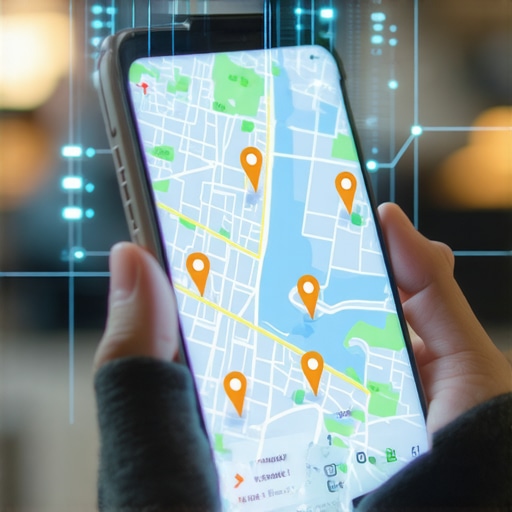
In the world of local search, “Page Two” is effectively a graveyard. Statistics consistently show that over 90% of users never click past the first page of search results, and for local intent, the “Map Pack” (the top three local listings) captures the lion’s share of clicks. If you are a plumber, lawyer, or HVAC contractor and you aren’t in those top spots, you are losing leads to competitors who might not even be as skilled as you are. They just have better google business profile seo.
Many business owners believe the solution to a low ranking is simple: buy more citations. They head to a marketplace, purchase a package of 500 directory listings for $50, and wait for the phone to ring. Months later, they remain stuck on page two. As a Google Business Profile Product Expert, I see this daily. The “Page Two Curse” isn’t usually caused by a lack of citations; it’s caused by the technical decay and inconsistency within the citations you already have. In the modern era of google business profile seo, quality and technical precision have replaced brute-force quantity.
Why “More” is Not “Better” in Local Citations SEO
The myth that “more citations equals higher rankings” is a relic of 2015. Back then, the sheer volume of mentions across the web acted as a primary signal of a business’s existence. Today, Google’s algorithm is significantly more sophisticated. It doesn’t just count mentions; it verifies them. If you have 500 citations but 200 of them list an old phone number, 100 list a slightly different suite number, and 50 are on “spammy” link farms, you aren’t building authority – you are creating “noise.”
This noise creates a lack of trust in the algorithm. When Google’s “spiders” crawl the web and find conflicting data about your business, the engine becomes “confused” about which information is correct. Rather than risk showing a user the wrong phone number or address, Google simply suppresses your listing in favor of a competitor with a cleaner, more consistent data footprint. This is Why Hiring a GMB SEO Expert to Just Build Citations is a Waste of Money if they aren’t also fixing the underlying data integrity issues.
Instead of chasing volume, high-performing businesses use local seo tools to audit their existing presence. They focus on the “Core Four” and high-authority niche directories, ensuring that every single mention is an exact match to their Google Business Profile (GBP).
The 3 Silent Killers of Your Google Business Profile Ranking
Research from industry leaders like Rio SEO suggests that technical errors within your citation ecosystem are the primary reason for ranking stagnation. Here are the three “silent killers” that keep you off the Map Pack.
1. Broken Links & 404 Errors
One of the most overlooked aspects of local citations seo is the health of the URL linked within the citation. If your Yelp profile or a local Chamber of Commerce listing links to a page on your site that no longer exists (a 404 error), you lose “link equity.” More importantly, you signal to Google that your business is not being maintained. A google business profile audit tool can quickly identify these dead ends, allowing you to implement 301 redirects and reclaim your ranking power.
2. Improper Redirects and 302 Chains
Google hates uncertainty. If your citations link to `http://yourwebsite.com` but your site has since migrated to `https://www.yourwebsite.com`, you are likely forcing the crawler through a redirect. While a 301 redirect passes most of the “juice,” 302 redirects (temporary) or long redirect chains can dilute your local authority. These technical hiccups are common when businesses change their website structure without updating their citations. This is a critical component of The Specific Local SEO Errors That Keep Your Shop Stuck on Page Two.
3. Mismatched Categories
Consistency isn’t just about your Name, Address, and Phone number (NAP); it’s also about your business category. If your GBP is set to “Personal Injury Lawyer” but your citations on FindLaw or Avvo are listed under “General Practice,” Google may struggle to categorize your business for high-intent searches. This mismatch prevents you from appearing in the “Local Map Pack” for specialized queries that drive the most revenue.
NAP Inconsistency: The Ghost in the Machine
NAP stands for Name, Address, and Phone number. It is the bedrock of local search. However, many businesses suffer from “Ghost Edits” – unauthorized changes made by third-party data aggregators or even well-meaning users. If a directory thinks your business moved because it found an old utility bill record, it might update your address without your knowledge. These inconsistencies are the “ghosts” that haunt your google business profile optimization efforts.
Imagine the algorithm as a jury. If three witnesses say the suspect was at the park, but two witnesses say he was at the mall, the jury has “reasonable doubt.” NAP inconsistencies create reasonable doubt for Google. To combat this, you must proactively monitor your data. Check out 7 Ways to Spot NAP Inconsistencies Before They Tank Your Ranking to learn how to identify these errors before they trigger a ranking drop.
Using NAP consistency seo as a strategy involves more than just a one-time fix. It requires ongoing surveillance of the major aggregators (Data Axle, Neustar, etc.) to ensure your “official” data remains the dominant version of the truth across the web.
Proximity Filters and the 2026 AI Search Landscape
As we move toward 2026, the way Google handles local search is shifting. We are seeing the rise of AI Overviews and “Immersive Leads.” In this new landscape, Google isn’t just looking for mentions; it’s looking for “physical proof” of location. Citations are evolving from simple text listings into rich data points that include geotagged photos, check-ins, and verified reviews.
The “Proximity Filter” has also become more aggressive. Google is narrowing the radius of search results to provide the most relevant local options. If your citation data is messy, Google’s AI may struggle to place your “pin” accurately on the map, causing your visibility to drop off just a few miles from your office. To stay ahead of these shifts, you need a Fix Local Map Radius Drops Using This 2026 Google Maps Action Plan. The goal is to provide so much consistent data that the AI has no choice but to trust your location’s relevance.
How to Audit Your Citations for a Google Maps Visibility Boost
If you suspect citations are the reason you are stuck on page two, follow this step-by-step audit process to rank higher on google maps.
- Step 1: Baseline Your Rankings. Use a google maps rank tracker to see exactly where your business appears for your primary keywords across different neighborhoods. This will show you if you have a “proximity hole” or a global ranking issue.
- Step 2: Identify Your Core Citations. Focus on the “Big Four”: Google, Apple Maps, Bing, and Yelp. If these four are not 100% identical to your GBP, nothing else matters.
- Step 3: Clean Up Duplicates. Duplicate listings are often worse than incorrect ones. They split your “review juice” and confuse the algorithm. Search for your business name and phone number on major directories to find and merge any duplicates.
- Step 4: Audit Your Niche Directories. For a lawyer, this means Avvo and Martindale-Hubbell. For a contractor, this means Angi and HomeAdvisor. These niche sites carry more weight for local map pack seo than generic directories.
For a comprehensive list of every technical step required, refer to The Ultimate Local SEO Checklist for Boosting Your Business Ranking.
Beyond Citations: Signals That Move the Needle in 2026
While fixing your citations is mandatory, it is only the foundation. In 2026, citations are the “ticket to the game,” but they aren’t the trophy. To truly dominate the google maps lead generation game, you must layer on additional signals:
- Review Velocity: It’s not just about having 5 stars; it’s about how frequently you get new ones.
- Photo Engagement: Google’s AI now analyzes the content of your photos to verify you actually do the work you claim to do.
- Foot-Traffic Proof: Google uses anonymized mobile data to see if people actually visit your physical location. If you claim to be a busy restaurant but no phones ever enter your building, your rankings will suffer.
Is your strategy keeping up? Ask yourself: Is Your 2026 Local SEO Checklist Missing Foot-Traffic Proof? If you aren’t accounting for these real-world signals, your digital citations can only take you so far.
Conclusion: Your Google Maps Action Plan
Breaking the “Page Two Curse” requires a shift in mindset. Stop looking for the “next big thing” in SEO and start mastering the fundamentals of data integrity. A clean Google Business Profile is a high-performing Google Business Profile. By eliminating 404 errors, correcting 302 redirects, and ensuring absolute NAP consistency, you remove the friction that prevents Google from ranking you #1.
Consistency is the ultimate trust signal. When every corner of the internet agrees on who you are, where you are, and what you do, Google will reward you with the visibility your business deserves. Don’t let a simple technical mistake keep you from the leads you need to grow.
Ready to automate your growth? Use SEO Viper Tools to streamline your audit process, or leverage our google maps ranking service to handle the heavy lifting for you. The top of page one is waiting – it’s time to claim your spot.