
How we forced more phone calls from a silent Google Maps profile
How We Forced More Phone Calls from a Silent Google Maps Profile
There is a specific kind of frustration reserved for business owners who do everything “right” but still see zero results. You’ve claimed your listing, you’ve uploaded a few photos, and your dashboard says you’re getting thousands of “views.” Yet, the phone remains stubbornly silent. In the industry, we call this “Map Ghosting.” Your profile exists, but it’s effectively invisible to the people who actually want to spend money.
As a Local SEO Consultant and Google Business Profile Product Expert, I’ve seen this scenario play out across nearly every industry. The disconnect between “views” and “calls” is usually a symptom of a profile that lacks authority and real-world interaction signals. We recently took a “silent” profile for CDC Detailing LLC and transformed it into a lead-generation machine. In just five months, we achieved a 471% increase in phone calls, moving the needle from a meager 21 calls per month to over 120.
With Google processing over 9.5 million searches per minute – that’s 5 trillion annually – the opportunity is massive. But as the landscape shifts in 2026, simply “having” a profile isn’t enough. You have to force Google to recognize your relevance. Here is the exact blueprint we used to revive a ghosted profile and dominate the local map pack.
Why Your Google Business Profile Has Gone Silent (The “Ghosting” Problem)
If your rankings have plateaued or plummeted recently, you’re likely a victim of the “Search-Area Loop” or “Radius Blocks.” Following the December 2025 Core Update, Google significantly increased the weight of “physical proof.” It’s no longer enough to tell Google where you are; you have to prove you are active in that specific coordinate. This update penalized millions of profiles that lacked consistent, location-verified activity, effectively shrinking their ranking radius to a few blocks around their front door.
Many businesses find themselves trapped in a proximity bubble. They rank #1 if someone stands in their parking lot, but they drop to #20 if the customer is just two miles away. This “Radius Block” happens because Google’s algorithm is prioritizing businesses that demonstrate “Real-World Interaction Signals” over those with static information. If you aren’t using their local seo software to track these fluctuations, you are flying blind.
Internal Link: Why your shop is invisible: 4 proximity fixes for your local ranking checklist
The “Ghosting” problem is also exacerbated by the sheer volume of noise. Google recently reported blocking 292 million policy-violating reviews and removing 13 million fake profiles. This aggressive cleanup means Google is more skeptical than ever. If your profile hasn’t been updated with fresh, geotagged content or keyword-rich responses in weeks, the algorithm treats you as a “low-trust” entity. To break the silence, you have to move from a passive management style to an aggressive, signal-driven strategy.
Phase 1: The Foundation of Google Business Profile Optimization
Before you can force calls, you must ensure the foundation is unbreakable. Most businesses treat their profile like a digital yellow pages ad – static and minimal. In 2026, google business profile optimization requires a deep dive into unstructured data. Google’s AI now scans your entire profile – including service descriptions, custom attributes, and even the text within your uploaded photos – to match user intent.
First, we look at Category Selection. Most businesses pick one primary category and stop. We look for “Category Gaps.” For CDC Detailing, we didn’t just list “Car Detailing Service.” We utilized secondary categories like “Car Wash,” “Pressure Washing Service,” and “Auto Restoration Service” to capture top-of-funnel traffic. Each secondary category was backed by a dedicated “Service” entry in the profile dashboard.
Internal Link: Business Profile Checklist: Optimize for Local Search Today
Service build-outs are where the “unstructured” AI matching happens. Instead of just listing “Interior Cleaning,” we wrote 100-word descriptions for each service, naturally incorporating long-tail keywords. When a user searches for “remove coffee stains from car seats near me,” Google’s AI crawls those descriptions. If you haven’t explicitly mentioned those niche services, you won’t show up in the “Zero-Click” AI Overviews that are now dominating mobile search.
Finally, we optimize attributes. Are you “Veteran-led”? Do you offer “Online Appointments”? These small tags are often the deciding factor in the “Filter” stage of a user’s search. By filling out every possible attribute, you increase the surface area of your profile, making it more likely to appear in filtered searches that competitors are ignoring.
Phase 2: Forcing Authority with Real-World Interaction Signals
Once the foundation is set, we move to the “Force” phase. This is where we separate the amateurs from the experts. To rank a profile in a competitive market, you need local seo ranking tools that focus on activity, not just keywords. The most powerful weapon in our arsenal for CDC Detailing was the “Map Check-In” tactic.
A “Map Check-In” involves uploading a photo or a “Business Update” (formerly Google Posts) that is embedded with EXIF data (geotags) from the location where the service was performed. When our detailing team finished a job five miles away from the main shop, they took a photo and uploaded it directly to the GBP. This tells Google: “We don’t just exist at our office; we are actively providing service in this neighboring zip code.” This is the primary way to break out of a “Radius Block.”
Internal Link: The 5 interaction signals your local ranking checklist is currently ignoring
Next, we addressed “Review Velocity.” Most businesses ask for reviews sporadically. We implemented a system to ensure a steady “drip” of reviews. Google’s algorithm looks for consistency. A sudden burst of 50 reviews followed by three months of silence looks like manipulation. We also coached the client to respond to every review using “Human-First” language that naturally includes service keywords. For example, instead of saying “Thanks for the business!”, the response would be, “We’re so glad you’re happy with the ceramic coating on your Tesla Model 3 here in Orlando!”
Remember the 292 million blocked reviews I mentioned? Google is filtering out generic, short reviews. By encouraging customers to mention specific services and locations, and by responding in kind, you create a “Keyword Cloud” around your profile that forces Google to see you as the local authority. This interaction heat is what converts a “viewer” into a “caller.”
Phase 3: Technical Local SEO & Proximity Expansion
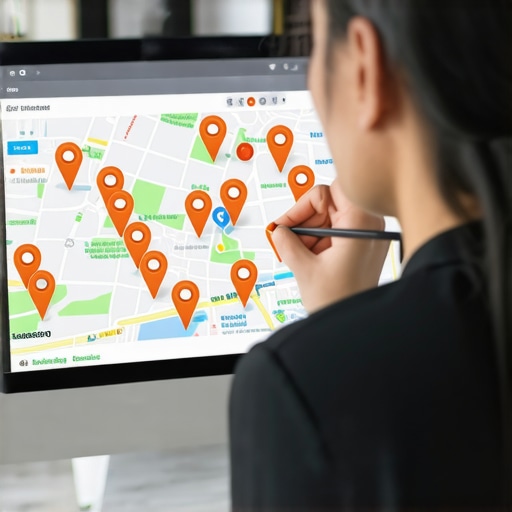
To truly dominate, you have to look at the technical side of proximity. One of the most common issues I find during an audit is “Latitude Drift.” This occurs when your map pin is slightly off-center or when your service area settings conflict with your physical address. We use a google maps rank tracker to visualize exactly where the “dead zones” are. If we see a sudden drop in rankings across a specific highway or neighborhood, we know we need to target that area with localized “Business Updates” and geotagged photos.
Proximity expansion is about convincing Google that your “Authority Radius” is larger than your “Physical Radius.” We do this by building “Local Justifications.” You’ve seen these before – they are the little snippets in the search results that say “Their website mentions [Service]” or “Reviewers mention [Service].”
Internal Link: Fix Local Map Radius Drops Using This 2026 Google Maps Action Plan
By syncing the Google Business Profile with localized landing pages on the main website, we create a feedback loop. If the website has a page dedicated to “Car Detailing in [Suburb Name],” and the GBP has a “Business Update” about a job in that same suburb, Google gains the confidence to show that profile to users in that specific area. We are effectively “stretching” the map pin to cover a wider geographic footprint. This technical alignment is why we were able to force such a massive call volume increase for CDC Detailing – we didn’t just rank in their town; we ranked in every surrounding township.
Navigating the 2026 Local Landscape: Ads and AI Overviews
The local search landscape is more crowded than ever. Between late 2025 and early 2026, local pack ads surged by 733%. This means that even if you are the #1 organic result, you might be pushed down by two or three “Sponsored” pins. To survive this, your google business profile seo must be so robust that you win the “click” even when you aren’t at the very top.
This is where “Visual Authority” comes in. When a user sees a sea of pins, they click on the one with the most compelling imagery and the most recent activity. Profiles that post weekly updates and have high-quality, “real-life” photos (not stock photos) have a significantly higher Click-Through Rate (CTR). High CTR is a secondary ranking signal; the more people click your profile, the more Google thinks you are the best answer, further cementing your rank.
Internal Link: This 2026 Google Maps Action Plan Stops AI From Stealing Leads
Furthermore, we must account for AI Overviews (formerly SGE). Google is now providing “Zero-Click” answers at the top of the search page. If someone asks, “Who is the best car detailer for pet hair removal?”, the AI will summarize the best options. To be included in that summary, your profile needs to have “Proof of Service.” This means having reviews, service descriptions, and Q&A sections that specifically mention those niche problems. By using rank higher on google maps strategies that focus on these long-tail queries, we ensure that our clients are the ones being recommended by the AI, not just the ones listed in the map pack.
Conclusion: Your 3-Step Google Maps Action Plan
Reviving a silent Google Maps profile isn’t about luck; it’s about forcing the algorithm to acknowledge your activity. The 471% increase in calls we saw with CDC Detailing wasn’t an accident – it was the result of a deliberate, three-phase attack on “Map Ghosting.”
- Audit: Use a google business profile audit tool to identify where your “Radius Blocks” are and where your profile is lacking unstructured data.
- Optimize: Build out every service, attribute, and category. Don’t leave a single field blank. Use AI-friendly descriptions to capture “Zero-Click” leads.
- Signal: Generate “Real-World Interaction Signals” through geotagged photos, consistent review velocity, and keyword-rich responses.
Stop waiting for the phone to ring. In the competitive landscape of 2026, visibility is taken, not given. Start forcing your way to the top of the Map Pack today. If you’re ready to see where your profile stands, I invite you to download The Ultimate Local SEO Checklist for Boosting Your Business Ranking or contact me for a deep-dive local seo tools strategy session.