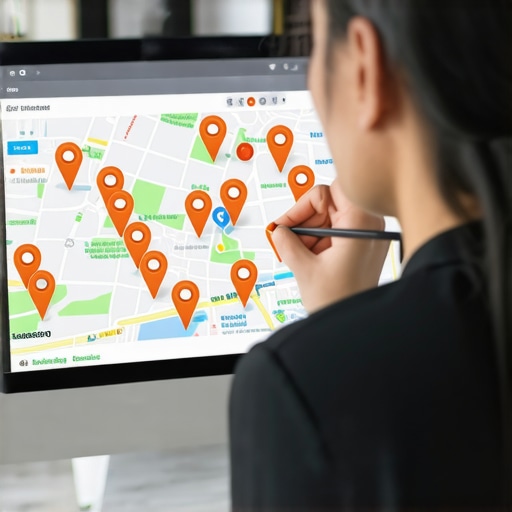

The Map Embed Strategy That Actually Moves the Needle on Local Search
The Map Embed Strategy That Actually Moves the Needle on Local Search
You’ve done the work. You’ve claimed your listing, uploaded high-resolution photos, and hounded your best customers for five-star reviews. Yet, when you search for your services from a few blocks away, your business is nowhere to be found in the coveted Local 3-Pack. Your pin is effectively invisible. This is what I call “Map Pin Ghosting,” and it is the silent killer of local service businesses.
As an expert in google business profile seo, I see this daily. Business owners follow a generic Google Maps Action Plan: Winning Local Visibility in 2025, but they miss the technical bridge that connects their physical location to their digital authority. In 2026, the algorithm has moved beyond simple citations. To win today, you need to prove your “Physical Proof of Service.”
One of the most underrated yet powerful ways to do this is through a strategic Map Embed. This isn’t just about putting a map on your contact page so people can find your office; it’s about creating a hard-coded link between your website’s authority and Google’s Entity Map. In this deep dive, I’m going to show you exactly how to execute a map embed strategy that actually moves the needle.
The “Invisible Pin” Problem: Why Your Presence is Ghosted
The frustration is real. You have a verified Google Business Profile (GBP), but you aren’t ranking. Most SEO “gurus” will tell you to just add more keywords to your description. They’re wrong. The issue usually isn’t your description; it’s a lack of connectivity between your website and your GBP entity.
Map Pin Ghosting happens when Google recognizes you have a business, but doesn’t have enough “confidence” in your location’s relevance to a specific search query to place you in the 3-pack. You might show up on page 4 of the maps results, but as we know, that’s where the leads go to die. Even a well-intentioned 2026 Google Maps Action Plan can fail if it treats your website and your GBP as two separate islands.
The map embed acts as the bridge. It tells Google: “This digital content (the website) is explicitly tied to this physical entity (the GBP).” Without this bridge, you are relying on Google to guess the connection. In the competitive landscape of 2026, guessing doesn’t get you the phone calls.
Why Map Embeds Move the Needle: The Data-Driven Reality
Is a map embed really that important? The data says yes. A landmark case study by SearchPilot demonstrated that when local components – specifically Google Map embeds – were removed from local landing pages, there was a statistically significant drop in organic traffic. This proves that maps are not just a UI/UX feature; they are a critical relevance signal for search engines.
When you implement google business profile optimization correctly, you are feeding the three pillars of local search: Proximity, Relevance, and Prominence. A map embed hits all three:
- Proximity: It reinforces your exact coordinates via the Google Maps API.
- Relevance: It associates your website’s content with a specific geographic entity.
- Prominence: It increases the “Interaction Heat” on your profile, which Google uses to determine how popular or useful your business is to searchers.
By using professional google business profile optimization techniques, you ensure that your NAP (Name, Address, Phone) data is perfectly synced. An embed is essentially a dynamic citation that never goes out of date. It’s part of the 5 Local Ranking Checklist Factors That Actually Win in 2026.
The Technical Execution: Going Beyond the Standard Iframe
Most people make the mistake of going to Google Maps, typing in their address, and hitting “Embed a map.” This is a rookie move. If you want to rank google business profile assets effectively, you need to embed the Business Entity, not just the address.
Step 1: The CID-Linked Embed
Instead of searching for “123 Main St,” search for your Actual Business Name on Google Maps. When the listing appears, click “Share” and then “Embed a map.” This generates a code that includes your unique CID (Cluster ID). This CID is the permanent identifier Google uses for your business entity. By embedding this, you are telling Google exactly which business listing this website belongs to.
Step 2: Strategic Placement
Don’t just bury your map in the footer of every page. While a footer embed is standard, it can sometimes dilute the signal if not handled correctly.
For multi-location businesses, this is non-negotiable: Every location-specific “City Page” must have its own unique map embed for that specific branch. This creates a hyper-local relevance loop. If you are a plumber in Dallas with a page for “Plumbing Services in Plano,” that Plano page needs the Plano GBP map embedded on it. This is a key part of The Schema Markup Fix That Actually Forces Google to Show Your Service Area.
Step 3: API Integration
If you are using local seo tools like local seo tools, you know that technical precision matters. Ensure your site isn’t just loading a static image of a map. It needs to be a functional, interactive element that allows users to engage with the Google Maps interface directly from your site.
The “Interaction Heat” Strategy for 2026
As we look toward 2026, Google’s algorithm is becoming increasingly obsessed with user behavior. They aren’t just looking at who has the most backlinks; they are looking at “Interaction Heat.” This refers to how users interact with your business across the web.
When a user lands on your website and interacts with your embedded map – zooming in to see your cross-streets, clicking “Directions,” or switching to satellite view – Google tracks that interaction. This provides “Physical Proof of Service.” It tells Google that a real human is interested in your physical location. This interaction sends a massive power surge to your GBP, helping you rank higher on google maps.
To maximize this, I recommend adding a clear Call-to-Action (CTA) near your map. Instead of just “See our location,” try “Get Driving Directions to Our Showroom.” This encourages the specific click that Google values most. Using advanced local seo automation tools can help you track these interactions and see how they correlate with your ranking shifts.
Common Pitfalls & Radius Blocks
Even the best strategy can be derailed by technical errors. If your map embed isn’t moving the needle, check for these common issues:
- Broken API Keys: If you are using a custom map plugin, ensure your Google Maps Platform API key is active and has no billing issues. A “Development Purposes Only” watermark is a trust-killer for both users and Google.
- Generic Address Embeds: As mentioned, embedding just the coordinates or address is a missed opportunity. Always embed the Business Entity.
- Mobile Responsiveness: Over 70% of local searches happen on mobile. If your map embed breaks your site’s mobile layout or makes it impossible to scroll, users will bounce. This negative user signal will tank your rankings.
- NAP Inconsistency: If the address on your website footer doesn’t perfectly match the address in the map embed, you might trigger proximity filters. This is why Why Your Name and Address Data Still Triggers Proximity Filters is such a critical read for any serious SEO.
To ensure your strategy is airtight, always perform a comprehensive google business profile audit. You need to know exactly where you stand before you can start climbing. Check your current standing with the The Ultimate Local SEO Checklist for Boosting Your Business Ranking to identify any other foundational gaps.
Conclusion: The 2026 Roadmap to Local Dominance
The Map Embed Strategy is not a “set it and forget it” task. It is a foundational element of local map pack seo. By moving away from generic address pins and toward entity-linked, interactive embeds, you are providing Google with the “Physical Proof of Service” it craves. You are moving your business from a “maybe” to a “definitely” in the eyes of the algorithm.
As we move into 2026, the gap between businesses that understand these technical nuances and those that don’t will only widen. Don’t let your business be a ghost on the map. Take control of your local presence by integrating your website and your GBP into a single, authoritative entity.
If you’re ready to stop guessing and start growing, it’s time to use a professional google maps ranking service. Tools and expertise are the difference between page one and page nowhere. I highly recommend checking out SEO Viper Tools for the most advanced google maps rank tracker and optimization suites available today. Your google maps seo strategy is only as strong as the data you use to fuel it. Build your map, build your heat, and own your local market.