Why Your Name and Address Data Still Triggers Proximity Filters
Why Your Name and Address Data Still Triggers Proximity Filters
You’ve done everything the “gurus” told you to do. You claimed your Google Business Profile (GBP), you meticulously matched your Name, Address, and Phone number (NAP) across every directory from Yelp to the Yellow Pages, and you’ve even managed to snag a handful of five-star reviews. Yet, when you drive two blocks away from your office and search for your services, your business is nowhere to be found. You’ve been “ghosted” by the map pack.
Welcome to the reality of the 2026 proximity filter. As a Google Business Profile Product Expert, I see this daily: businesses that are technically “perfect” on paper but remain invisible in the real world. The hard truth is that Google’s algorithm has moved far beyond simple matching. Today, the local search landscape is governed by a strict triad: Relevance, Distance, and Prominence. If you aren’t appearing where you should, it’s because Google has decided that showing your pin would create “choice overload” or, worse, that your physical data lacks the real-world evidence required to break through the filter. In this deep dive, we’re going to dismantle the myth of NAP consistency and show you how to actually rank google business profile assets in an era of hyper-local filtering.
The Proximity Paradox: Why “Near Me” is Getting Harder
In the early days of local SEO, proximity was a simple radius. If you were within five miles of the searcher, you had a fighting chance. But as we move through 2026, the “radius” model has been replaced by a “hyperlocal” model driven by neural matching and real-time user density. This is the Proximity Paradox: as Google gets better at understanding where a user is, it becomes more selective about which businesses it shows, often filtering out authoritative brands in favor of hyper-proximate ones – or filtering out everyone in a specific area due to data redundancy.
The local map pack seo game has shifted from “Who is the best?” to “Who is the most relevant right here, right now?” This shift often causes proximity to override traditional authority. You might have 500 reviews and a decade of history, but if a competitor is 500 feet closer to the user and has “fresher” location signals, you lose. To combat this, you need to understand that proximity is no longer a static attribute; it is a filter that must be actively bypassed. Using advanced local seo tools can help you visualize these invisible boundaries, but understanding the logic behind them is the first step to winning. For a foundational look at what still matters, check out The Ultimate Local SEO Checklist for Boosting Your Business Ranking.
The “Same Building, Same Category” Trap
One of the most frustrating triggers for the proximity filter is what I call the “Same Building, Same Category” trap. This is a common nightmare for businesses in medical plazas, shopping malls, or co-working spaces. If you are a chiropractor in Unit A and there is another chiropractor in Unit B, Google’s algorithm sees two identical data points in the same physical footprint. To provide a “diverse” user experience, Google will often filter one of you out of the primary results.
Kevin Pauls’ Perspective: “Google doesn’t want to show three chiropractors in the same building; it wants to show the one with the most real-world engagement.” The algorithm views redundant categories at the same address as a poor user experience. If you share an address with a competitor, standard NAP consistency seo isn’t going to save you. In fact, if your NAP is too similar to a filtered-out competitor, you might be dragged down with them.
To break this filter, you must differentiate your “Physical Proof of Service.” This means moving beyond the address line and proving that your specific unit is a hub of unique activity. If you don’t address this, you’ll find your profile suppressed regardless of your SEO efforts. You can learn more about identifying these technical overlaps in our guide on 7 Ways to Spot NAP Inconsistencies Before They Tank Your Ranking.
Beyond NAP: Why “Consistency” is No Longer the King
For years, the mantra was “NAP, NAP, NAP.” If your name, address, and phone number were consistent, you were safe. In 2026, basic consistency is merely the “bedrock” – it’s the bare minimum required to enter the race, not the fuel that wins it. Relying solely on traditional local seo ranking factors like citation building leads to stagnation because Google now prioritizes “Proof of Transaction” and “Foot-Traffic Proof” over static directory listings.
Google’s AI-driven verification tools now look for signals that a business is actually operating at the stated location. This includes:
- Mobile Device Patterns: Are pings from user phones actually stopping at your coordinates?
- Search-to-Visit Ratios: Do people who search for you actually trigger “Directions” requests and arrive?
- Transaction Data: (In some sectors) Digital receipts and confirmation of services rendered.
When you focus on google business profile seo, you must realize that Google is looking for movement. A static, “consistent” profile with no interaction is a red flag for the proximity filter. Google assumes that if no one is interacting with the business physically, it may not be the best option for the searcher, even if it is the closest. Achieving a high google business profile ranking requires a shift from passive data management to active engagement signaling.
3 Proximity Filter Fixes for 2026
If you suspect you are being filtered out, you need to inject “Real-World Evidence” into your profile. Here are three aggressive strategies to break the proximity barrier and rank higher on google maps.
1. Hyperlocal Content & Landmark Association
Stop writing generic blog posts. To break a proximity filter, your content must be tied to the physical geography of your neighborhood. Mention specific landmarks, nearby intersections, and local events. This creates a “geographical relevance” that tells Google’s AI your business isn’t just at an address, but is an integral part of that specific micro-neighborhood. This is a core component of This 2026 Google Maps Action Plan Wins the New Proximity Battle.
2. Interaction Heat: Driving Intentional Clicks
Google measures the “heat” of your profile. This includes “Request a Quote” clicks, “Message” starts, and, most importantly, “Directions” requests. If you want to expand your ranking radius, you need to encourage users from slightly further away to interact with your profile. This can be done through localized social media ads or email campaigns that target specific zip codes, forcing the algorithm to recognize your relevance outside of your immediate block.
3. Visual Verification: The Contextual Photo Strategy
Generic stock photos or even professional office shots aren’t enough anymore. You need what I call “Visual Verification.” These are photos that prove your physical presence through context.
- The Street-to-Suite Shot: A video or series of photos showing the transition from the street sign to your front door.
- The Neighborhood Context: Photos of your team at a recognizable local landmark or park.
- The Service-in-Action: Geotagged photos of your trucks or staff at a customer’s location (for Service Area Businesses).
This proves to Google’s AI that you are a legitimate entity, helping you pass authenticity checks and preventing the dreaded “shadow-filtering” that happens to many new profiles. For more on the specific imagery that works, refer to our internal post on the “One Photo Type” every GBP needs.
Tools to Monitor Your Proximity Health
You cannot fix what you cannot see. Checking your rankings from your office desk is the biggest mistake you can make in local SEO. Because of the proximity filter, your rankings change every few hundred feet. To truly understand your performance, you need a local seo software suite that provides grid-based tracking.
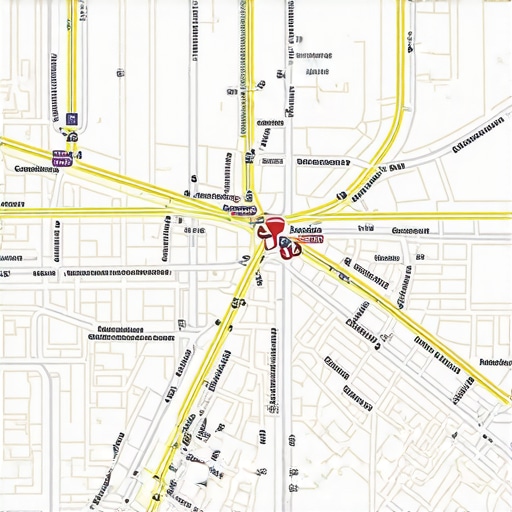
A google maps rank tracker will show you a “heat map” of your visibility. You might be #1 at your front door, but #12 two blocks North. This visual data allows you to identify exactly where the filter is triggering. If you see a sharp “drop-off” at a specific boundary, you know that you are likely being filtered by a competitor in that area or that your geographical relevance signals aren’t reaching that far. Using professional local seo ranking tools is the only way to move from guesswork to precision engineering of your local presence.
Conclusion: Reclaiming Your Map Pin
The proximity filter isn’t a wall; it’s a filter. It is Google’s way of ensuring that the google map pack ranking factors prioritize the best possible user experience. If you are being filtered out, it’s a signal that your “Real-World Evidence” is weaker than your competitors’ or that your data is too redundant for the algorithm to trust.
By moving beyond simple NAP consistency and focusing on hyperlocal content, interaction heat, and visual verification, you can signal to Google that your business is the most prominent and relevant choice in your area. Don’t let your business become a “ghost pin.” It’s time to take an aggressive approach to your google maps ranking service strategy and prove to the algorithm that you belong at the top.
Ready to stop guessing? Perform a comprehensive audit and start implementing the Google Maps Action Plan: Winning Local Visibility in 2025 to ensure your business stays visible, no matter how much the algorithm shifts.